The Evolution of the Printing Industry
Printing is an essential part of any business. However, printing has not always been as easy as clicking a button and waiting for a physical copy. On the contrary, printing has come a long way since its inception.
This article will dive deep into the evolution of the printing industry to where it is today.
The History of The Printing Industry
6th Century
1. Woodblock Printing
One of the first-ever recorded printing was during the 6th Century. Woodblock printing was invented in China during the Tang Dynasty Rule.
Woodblock printing involved engraving wood blocks with patterns and images. Afterwards, the blocks would be inked and pressed onto paper or cloth for printing.
12th Century
1. Movable Printing
Movable printing was created around the 12th Century in Asia. Though moveable printing is similar to woodblocks, this technique was uniquely designed for printing scripts.
This form of printing involved engraving individual letters onto clay, wooden, or cast metal blocks. The letters would then be arranged in a particular order, placed onto a tablet, and painted over before pressing the tablet onto cloth or paper.
15th Century
1. Gutenberg Printing Press
In 1450, Johannes Gutenberg’s invention was a game-changer for the printing industry. While experimenting with metal-type printing, the German inventor created the first commercial printing press, the Gutenberg Press.
In 1452, Johannes Fust and Gutenberg produced the first book, the 1300-page Gutenberg Bible, printing around 180 copies. Afterwards, the printing press started taking on other projects like calendars and pamphlets.
19th Century
1. Rotary Press
Though the Gutenberg Press paved the way for commercial printing, the need for more efficient printing services that could handle high printing volumes led to the innovation of the Rotary Press. Invented by Richard March Hoe in 1846, he developed and improved Napier’s design of the rotary printing press.
One of the significant improvements of the rotary press was its capacity to handle continuous printing for hours. The rotary press used a revolving cylinder, ensuring faster printing, especially for magazines and article printing. William Bullock later invented the automated roll-fed rotary printing press, improving printing speed and making the press.
2. Offset Printing
Another technique developed late in the century was offset printing. Invented by Robert Barclay in 1875, the style was first developed for printing on metal, based on lithographic printing. However, in 1904, the technique was later adapted for paper printing.
The technique used the principle of oil and water repulsion. An aluminium plate is divided into two sections during printing: one used for images and attracts ink, and another non-image area that repels ink. The plate is then dipped into a solution that binds to the non-image area and into ink.
The ink only adheres to the image part of the plate. Once this is done, the plate is later rolled into a cylinder and rubbed against a paper for printing.
One advantage of offsetting is its ability to produce precise, sharp images. Though there have been minor adjustments to the technique, most magazines and newspaper companies also use it due to its cost-effectiveness and large-scale printing.
20th Century
1. Screen Printing
The 20th Century started with screen printing or serigraphy screen printing. Though the technique was invented and widely used in China, it got to Europe early in the 1910s.
The technique used mesh screens to transfer ink onto a flat printing surface like paper or fabric. The method is still widely used when printing artwork, posters, and canvases. Likewise, special inks also made it possible to print on plastic, wood, glass, and metal.
Mesh screens made creating multiple copies of the same design easier, making it popular for custom clothes design and branding.
2. Inkjet Printing
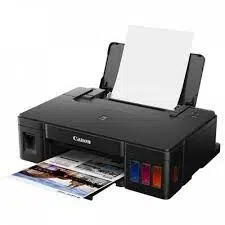
Inkjet printing was the next best printing innovation. The technique took advantage of the rising digital era and could recreate digital images onto paper and other materials. The printers propelled ink droplets to create copies of digital documents and photos.
To date, inkjet printers are still the most popular type of printer in the industry. They offer a wide range of products based on printing quality, volume, and speed. This makes them ideal for home use, small businesses, and large companies to print based on their requirements.
3. Thermal Printing
1965 also saw the beginning of thermal printing. Invented by Nobel Prize laureate Jack Kilby, thermal printers were an affordable way to print digital documents or files onto paper.
The technique uses a thermal ribbon to heat and melts wax or ink within the printing head onto paper. Though the style is fast, it often produces low-quality prints and is often quicker than most printing methods. In most cases, thermal printers are used to issue receipts or invoices.
4. Laser Printing
In 1969, Gary Keith Starkweather invented the first laser printer. This groundbreaking innovation improved the quality and speed of printers in the market.
The printers use a laser beam to charge the drum negatively. The drum then attracts positively charged ink powder and presses it over the paper. Under extreme pressure and heat, the ink binds to the paper permanently, producing high-quality text and graphics.
Laser printers are still heavily relied on. Some of the world’s leading manufacturers of laser printers include Canon, IBM, and Xerox.
21st Century
1. 3D Printing
3D printing is one of the most significant innovations in the printing industry in this century. 3D printing technology allows you to reproduce digital 3-dimensional images into physical form.
The process starts by designing using modelling software like AutoCAD or Blender. Once the model is done, it is sent to the printer, which heats and melts polymers into a liquid for layering. After laying, the material hardens, creating the physical reproduction of your 3D model.
3D printing has become a popular way for many industries to manufacture products based on clients’ specific requirements or mass-produce items. Some fields utilising the technology include healthcare services, architecture, robotics, aerospace, construction, and manufacturing sectors.
In a Nutshell
Continuous innovation drives the printing industry to new heights leading to more advanced technology. Nowadays, personalisation and branding in printing play a crucial role in businesses’ marketing and improving user experience. We can expect a lot to change in the coming years.
If you are looking for an expert in the printing industry, contact us.